

Other Categories
How C. diff Survivors Are Turning Personal Pain Into Public Health Reform
When you are lying in a hospital bed, or barely able to leave your bathroom, or watching a loved one fight for their life against a Clostridioides difficile (C. diff) infection, the last thing on your mind is Capitol Hill. You’re not thinking about legislative sessions, prescription formularies, or healthcare policy. You’re just trying to survive.
But something remarkable happens to many C. diff survivors on the other side of illness: they find their voice. And when they do, that voice carries weight.
Peggy Lillis Foundation believes that lived experience is one of the most powerful tools we have in the fight against C. diff. Patient advocates have stood before legislators, shared their stories with strangers, and helped shape real policy change, from expanded awareness to prescription drug access. This is the story of how that happens and how you can be part of it.
What Is C. diff and Why It Needs Advocates
Clostridioides difficile, commonly known as C. diff, is Gram-positive, spore-forming bacterium that is naturally occurring in the environment and causes approximately 500,000 infections and 30,000 deaths in the US every year. It is the leading cause of infectious diarrhea and the most common healthcare-associated infection. It is more common in patients over 65 years of age, immunocompromised patients, and people who have recently taken antibiotics, which disrupt the gut microbiome and creates an opening for C. diff to take hold.
While awareness has steadily increased over the last 10 years, largely due to the work of Peggy Lillis Foundation, C. diff is still not well understood by the general public, is underrepresented in the media, and underfunded in research. Many patients report feeling dismissed, isolated, and ashamed. This is not just because of the nature of the infection but because so few people around them have ever heard of it.
This is why patient advocacy matters. Policymakers respond to people, not just statistics. When a C. diff survivor sits across from a legislator and describes what it was like to be hospitalized for months, or to lose a loved one to a preventable infection, or to watch a spouse face the removal of their colon, something shifts. The issue stops being abstract. It becomes urgent.
What Happens When Survivors Share Their Stories
Advocacy does not require a policy background or a degree in public health. It requires willingness. The experience of living through C. diff, or supporting someone who has, is itself a form of expertise that no researcher or administrator can replicate.
For Pam McCollister, a C. diff survivor and PLF advocate, sharing her story has been both personally healing and politically meaningful.
“Being able to share my story with legislators has been the most empowering thing I have ever done. Fighting to bring awareness, education, and prescription reform is one way I can help save someone else from suffering with C. diff.”
— Pam McCollister, C. diff Survivor and Advocate
For families who have lost someone, or who have watched a loved one’s life be permanently altered, speaking out becomes a way to make meaning from tragedy.
Blanca Morales shares the story of her son Mundo, whose life was changed by C. diff at a young age:
“My son is not a statistic, he is a little boy whose life was forever changed by this disease. I share our story in the hope that it helps others understand the human impact of C. diff and inspires changes that make effective treatments more accessible for the families who need them.”
— Blanca Morales, C. diff Caregiver and Advocate
These are the stories that move legislation forward. A statistic tells a policymaker that half a million Americans are infected each year. A parent sitting across the table and describing their child’s suffering tells them why that number is unacceptable.
You Don’t Have to Be a Survivor to Advocate
C. diff advocacy is not limited to those who experienced the infection firsthand. Caregivers, spouses, and family members play an equally vital role in helping policymakers understand the full scope of the disease’s impact.
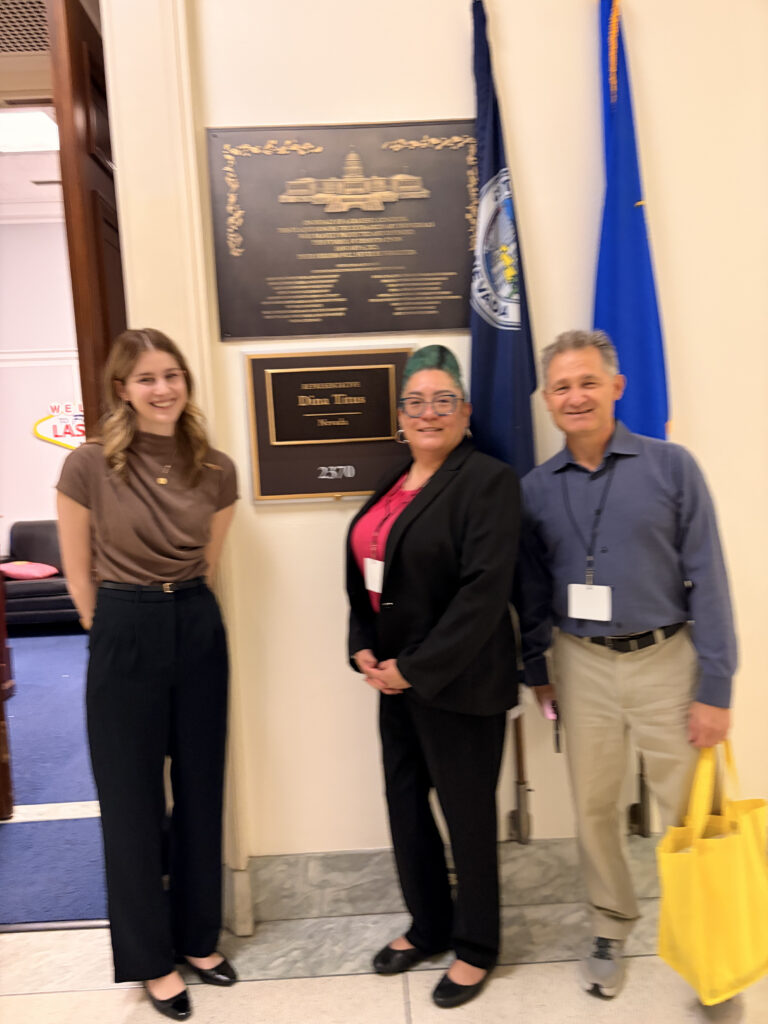
Devan Mullins advocates on behalf of his wife, who nearly lost her colon to C. diff:
“I love sharing my story about my wife’s experience with C. diff. It’s exciting to meet people who have never heard of it and share the terrifying emotions about how I learned my wife had it. Me: ‘What do you mean, you need to take out her colon?’ Telling our story helps end this preventable disease.”
— Devan Mullins, C. diff Caregiver and Advocate
The caregiver perspective fills a critical gap in public understanding. It shows that C. diff is not just a patient experience. It is a family experience, a community experience, and ultimately a public health crisis that touches everyone close to a diagnosis.
How Patient Advocacy Shapes C. diff Policy
At the federal level, patient testimony has helped advance several key areas of C. diff policy, including:
- Prescription drug access: Advocates have pushed for formulary changes that make newer, more effective C. diff treatments available to patients on Medicare and Medicaid.
- Hospital infection prevention standards: Personal stories have supported calls for stronger accountability and reporting around healthcare-associated infections.
- Research funding: When policymakers hear directly from patients and families, the case for increased research investment becomes harder to dismiss.
- Public awareness campaigns: Advocates have contributed to legislative support for public education efforts around C. diff prevention and recognition.
Minnie Hatch, whose family has been deeply affected by her experience with C. diff, captures the breadth of what sharing a story can accomplish:
“Our family has been through so much with this disease, and it gives us a way to share our experience in a way that can bring change. Whether it is policy change or just helping others feel a little less alone in the challenges they are facing, sharing my story has been one of the most impactful parts of my life.”
— Minnie Hatch, C. diff Advocate
Policy change is important. But so is the quieter work of helping another patient feel seen. Both matter. Both are advocacy.
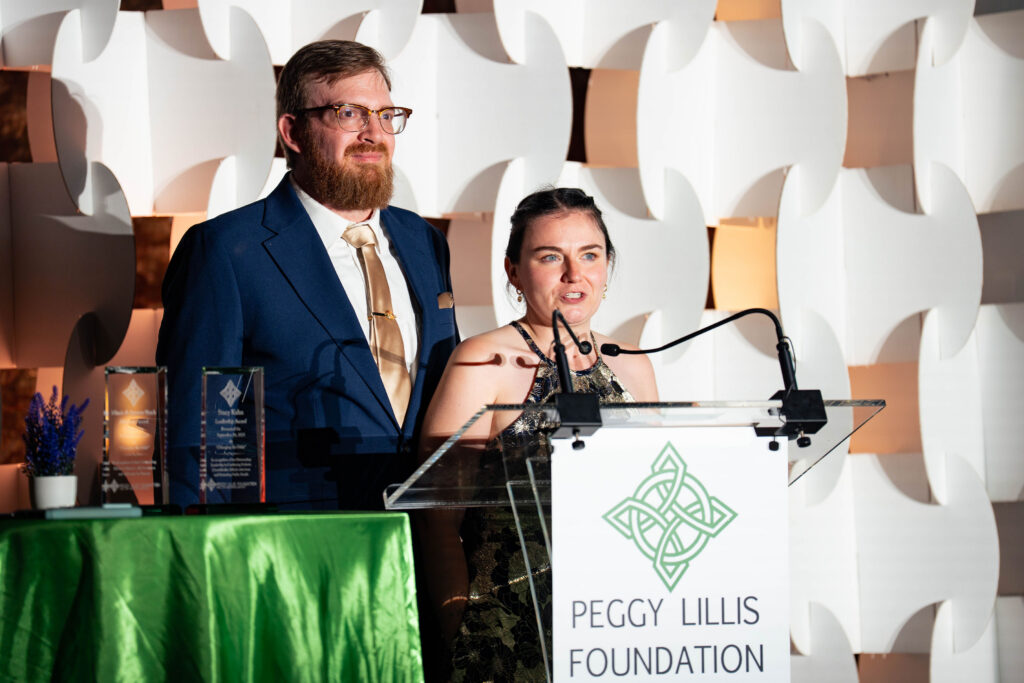
How to Share Your C. diff Story with Peggy Lillis Foundation
If you are a C. diff survivor, family member, or caregiver who wants to add your voice to this movement, Peggy Lillis Foundation wants to hear from you! There are several ways to get involved:
- Share your story on cdiff.org. Your account can help other patients feel less alone and show legislators the human face of this disease. Submit your story here.
- Become a PLF advocate. PLF’s advocacy network connects survivors with opportunities to speak at legislative briefings, participate in Lobby Day, and engage with media. Learn more about advocacy.
- Attend the annual National C. diff Summit and Lobby Day. Each year, advocates from across the country gather in Washington, D.C. to meet with lawmakers and make the case for C. diff policy reform.
- Tell your story on social media. Even a single post can reach someone in the middle of their own C. diff journey who has never encountered another survivor. Use #CDiffAwareness and tag @peggyfoundation
You survived something serious. Or you supported someone through it. That experience belongs to you. But it also has the power to protect someone else.
The Bottom Line
C. diff will not become a public health priority on its own. It will take survivors, caregivers, family members, and people who truly care showing up and refusing to let this disease remain invisible. Peggy Lillis Foundation is fighting this battle every day, but we can’t do it without you!
Pam McCollister said it plainly: sharing her story brings healing. It also brings change. Those two things are not separate. The most personal act of telling what happened to you, or to someone you loved, is also one of the most important.
Your story matters. And the world needs to hear it.


Leave a Reply