

Other Categories
September is Sepsis Awareness Month, a fitting moment to talk about a danger that too many people in the C. diff community learn about the hard way. A C. diff infection is often described as a gut infection, and it is. But when it goes untreated or turns severe, it can trigger a body-wide emergency called sepsis. Knowing how the two are connected and the warning signs can save a life.
What Sepsis is, and why C. diff can cause it
Sepsis is the body’s extreme, dysregulated response to an infection. Instead of fighting the infection in one place, the immune system goes into overdrive, damaging the body’s own tissues and organs. Left unchecked, it can lead to septic shock, organ failure, and death.
C. diff sits upstream of that danger. A severe C. diff infection inflames and injures the lining of the colon. In the most serious cases, that damage allows bacteria and toxins to breach the gut wall and enter the bloodstream, or it leads to complications like toxic megacolon or a perforated bowel. Any of these can tip a person into sepsis. This is part of why C. diff is not a “wait and see” illness. It is a medical condition that can escalate quickly, especially in older adults, people who are immunocompromised, and those who are already medically fragile.
The warning signs families should know
Ordinary C. diff symptoms are miserable but familiar: frequent watery diarrhea, abdominal cramping, and fever. The signs that an infection may be turning serious, or moving toward sepsis, are different and more urgent. Watch for:
- A high or climbing fever, or in some cases an abnormally low body temperature
- A racing heart rate or rapid breathing
- Severe abdominal pain, swelling, or bloating
- Confusion, disorientation, or unusual sleepiness
- Dizziness, lightheadedness, or a sharp drop in blood pressure
- Little or no urine output
- Skin that is clammy, mottled, or discolored
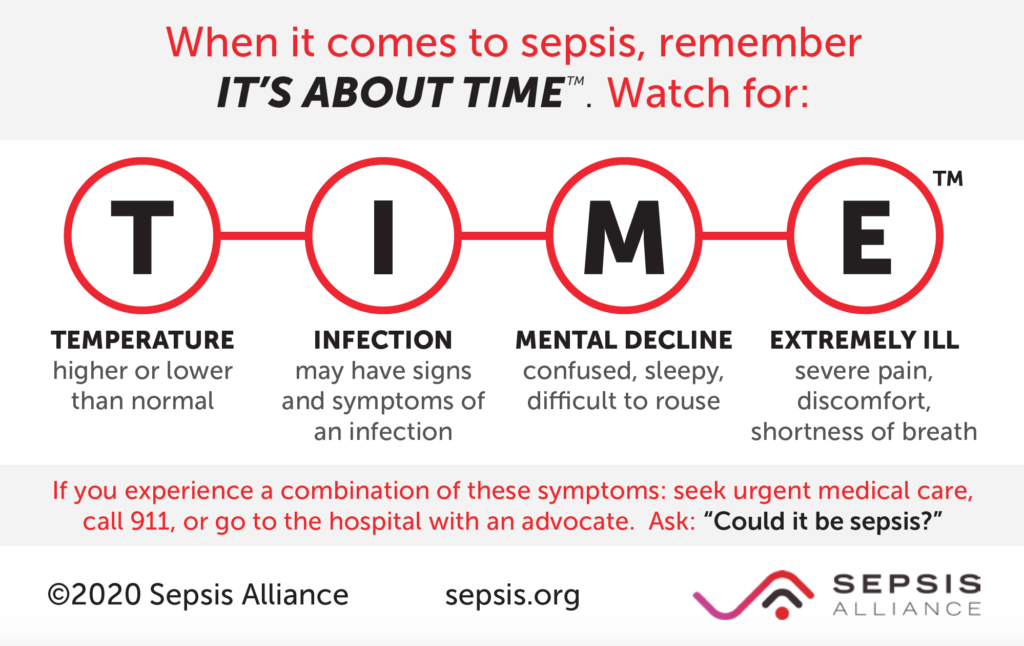
A helpful way to remember what to watch for is TIME:
- Temperature, higher or lower than normal
- Infection, meaning you may have signs and symptoms of an infection
- Mental decline, such as being confused, sleepy, or difficult to rouse
- Extremely ill, with severe pain or discomfort and shortness of breath. If someone with C. diff shows these signs, treat it as an emergency
When to seek emergency care
If you or someone you are caring for has C. diff and develops any of the warning signs above, do not wait for a scheduled appointment. Go to the emergency room or call emergency services, and tell the medical team two things clearly: that the person has a C. diff infection, and that you are worried about sepsis. Naming both helps clinicians move quickly toward the right tests and treatment.
Time matters enormously with sepsis. Every hour of delay in treatment raises the risk of lasting harm. Advocating loudly and early is not overreacting. It is exactly the right thing to do.
Why awareness is the first line of defense
So many people in our community say the same thing: they had never heard of C. diff until it happened to them or someone they love. That gap in awareness costs precious time. The same is true of sepsis. When families know that a serious C. diff infection can become a life-threatening emergency, they seek help sooner, ask sharper questions, and push for faster care.
That is the heart of the Peggy Lillis Foundation’s mission. Peggy died from sepsis caused by fulminant C. diff in 2010, just days after her symptoms began, at a time when far too few people understood how fast this infection can turn deadly. We work so that no other family is caught unaware.
If you want to learn more about C. diff, recognize the risks, and find support, explore our resources throughout this site. Awareness is protection, and it is something every one of us can share.


Leave a Reply